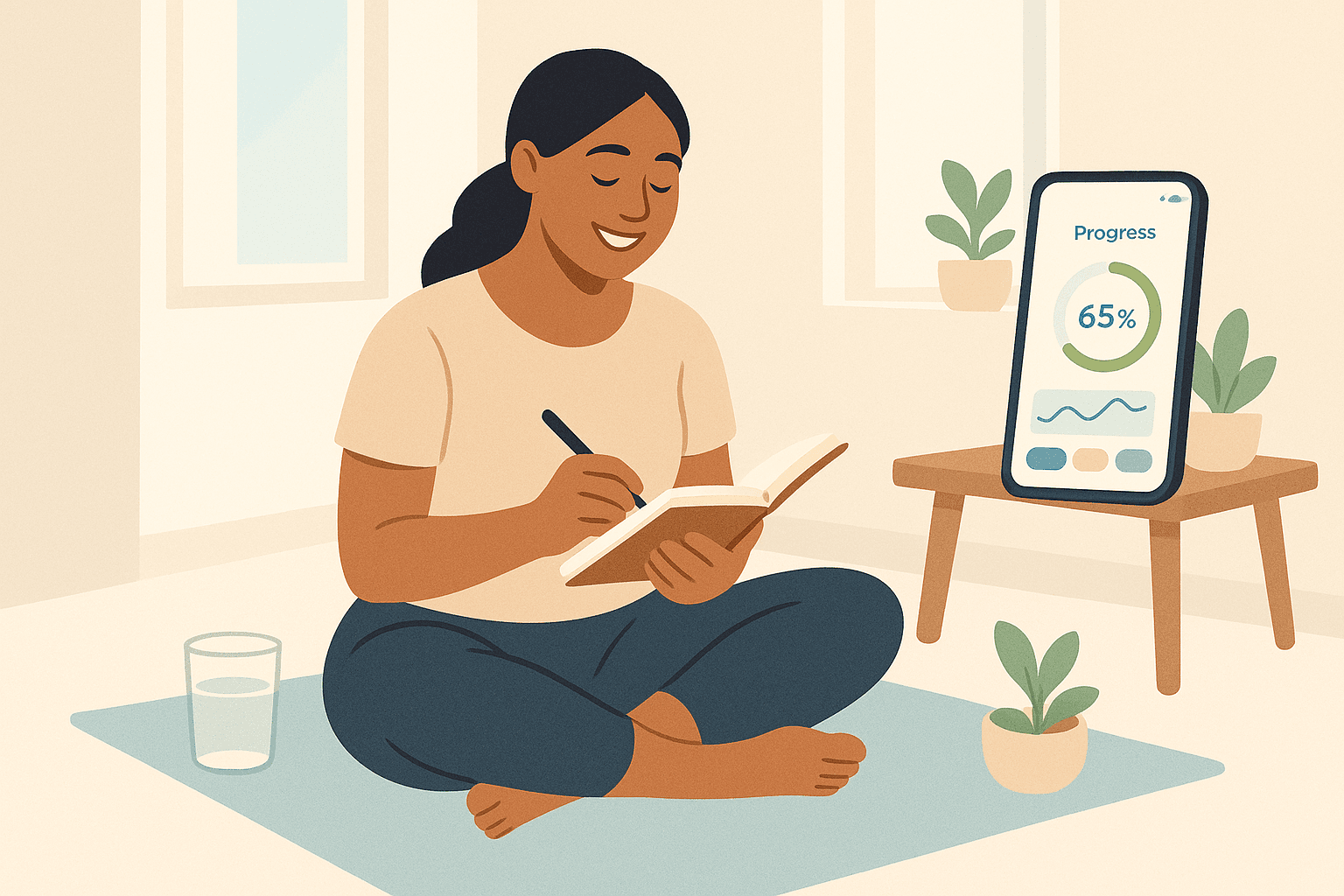
How to Stay Motivated When the Scale Won’t Budge
Feeling stuck on your weight-loss journey? Hitting a plateau is normal, but it can be frustrating. Here’s how to stay motivated and push through:
- Understand Plateaus: Your body adjusts to weight loss by slowing metabolism and conserving energy. This is temporary and part of the process.
- Track Non-Scale Victories: Focus on changes like better sleep, increased strength, or clothes fitting better.
- Reassess Habits: Watch out for hidden calories, reduced activity, or poor sleep that might slow progress.
- Make Adjustments: Try new workouts, increase protein intake, and create daily routines for consistency.
- Stay Mentally Strong: Practice self-kindness, reframe negative thoughts, and celebrate small wins.
- Use Tools Like AI Coaching: Daily check-ins and tailored advice can help you stay on track.
Plateaus don’t mean failure. They’re a chance to refine your approach and build sustainable habits. Focus on progress beyond the scale, and you’ll keep moving forward.
HOW TO STAY MOTIVATED & Breakthrough Weight Loss ...
Why Weight Loss Plateaus Occur
Weight loss plateaus affect about 85% of people and can be tough to navigate. Here's a closer look at why they happen.
How Metabolism Changes
When you cut calories, your body adjusts in several ways:
- Resting energy expenditure drops more than expected as your body works to conserve energy.
- Your body becomes more efficient at using energy, meaning it burns fewer calories for the same activities.
- Hormonal shifts occur, such as lower leptin levels (which help you feel full) and higher ghrelin levels (the hormone that triggers hunger).
These adjustments are your body's way of trying to maintain a stable weight.
Daily Habits That Affect Progress
Biology isn't the only factor. Your day-to-day habits also play a big role. Dr. Stacy Braff explains:
"When people start a diet or improve their nutrition, they tend to be vigilant in their eating habits. As they lose weight, they begin to feel more comfortable in their clothes and can start to lose focus."
Here are some common habits that can slow your progress:
| Habit | Impact on Weight Loss |
|---|---|
| Calorie Creep | Less attention to portion sizes and food tracking leads to eating more than intended. |
| Decreased Activity | Moving less as you feel more satisfied with your progress. |
| Poor Sleep | Disrupts hormone balance and makes it harder for your metabolism to function properly. |
| Inconsistent Tracking | Forgetting to account for hidden calories in sauces, drinks, or snacks. |
To push through a plateau, aim for 1.2 to 1.5 grams of protein per kilogram of body weight (0.54–0.68 grams per pound) daily. Adding more fiber-rich foods can also help by keeping you full longer and reducing calorie intake without sacrificing volume.
Measuring Success Beyond the Scale
Types of Non-Scale Progress
| Progress Area | Signs of Success |
|---|---|
| Physical Changes | - Clothes fitting differently - Radiant skin appearance |
| Performance Gains | - Lifting heavier weights - Walking/running longer distances |
| Daily Life | - Higher energy levels - Better sleep quality - Reduced joint pain |
| Mental Well-being | - Improved mood - Better stress management - Increased confidence |
Tracking these achievements can reinforce your progress and keep you motivated.
Methods to Record Progress
In January 2024, Signos user Chelsea Rae Bourgeois shared how using a bullet journal helped her visually track her progress. This approach allowed her to focus on overall improvements, not just numbers on a scale.
Here are some effective ways to track your journey:
- Daily Progress Journal: Write down positive changes daily, like how many push-ups you did or how active you were.
- Photo Documentation: Take photos every 4–6 weeks under the same conditions to see visible changes over time.
- Fitness Milestone Tracking: Keep a record of new personal bests in strength or endurance activities.
By maintaining these records, you'll see how every small success contributes to the bigger picture.
Why Small Wins Matter
"Non-scale victories reflect the plethora of ways an individual's health and wellness journey positively impacts their life. These victories are powerful motivators; encouraging individuals to celebrate and acknowledge the diverse array of improvements, promoting a more sustainable and balanced approach to weight loss and health goals."
Recognizing small improvements - like better sleep or increased strength - can help you stay committed to your health goals. These wins build momentum and remind you of the positive changes you're making.
Celebrating doesn't need to be extravagant. Treat yourself to a new workout outfit after hitting a fitness milestone or book a massage after a month of consistent activity. These rewards honor your progress while keeping your health goals in focus.
Health is about more than just weight loss. By tracking various aspects of your journey, you’ll create a fuller picture of your progress, helping you stay motivated even when the scale doesn't move.
Using AI Coaching for Support
When you hit a plateau, it can be tough to stay motivated. That’s where tools like AI coaching step in to help you refocus and adjust your approach. By offering steady support and actionable advice, AI coaching keeps you on track. It works alongside your habit of tracking non-scale victories, reinforcing the importance of daily evaluation.
Daily Check-ins with AI
Daily check-ins are a chance to review your activities, nutrition, and any obstacles in your way. These regular reviews can be especially helpful during plateaus that last around four weeks.
| Benefit | How It Helps |
|---|---|
| Consistency | Reinforces daily routines and healthy habits |
| Accountability | Tracks progress and highlights areas to tweak |
| Problem Solving | Encourages tackling challenges head-on |
| Goal Tracking | Monitors both scale and non-scale victories |
Personalized Guidance for Your Goals
After logging your progress, AI coaching provides custom insights to guide your next steps. Ember’s system analyzes your habits and offers specific recommendations to help you push through plateaus:
- Activity Suggestions: Tips to boost daily movement, like increasing NEAT (non-exercise activity thermogenesis). For example, walking 10,000 steps can burn around 300–500 calories.
- Nutrition Advice: Recommendations for protein intake, often set between 1.2–1.6 grams per kilogram of body weight.
- Progress Insights: Evaluations to determine if your plateau is temporary or if a new strategy is needed.
"Breaking a weight loss plateau isn't easy, but it's not impossible either. It's all about reassessing what's working, making smart adjustments, and staying patient with the process."
– Luis Centeno, Founder, Owner + Lead Trainer at FIT RESULTS ®️
Ember’s coaching system helps you stay grounded during tough times, reminding you that plateaus are a normal part of the journey. With data-driven insights and consistent support, AI coaching keeps you moving toward your goals - even when progress feels slow.
sbb-itb-09f2e92
Building Mental Strength
Staying mentally strong is key when progress slows. Mental resilience helps you stay committed during those challenging plateaus.
Practicing Self-Kindness
Studies suggest weight fluctuations can lead to negative emotions and even emotional eating. To counter this, practicing self-kindness can make a big difference.
| Mental Strategy | Tips for Implementation |
|---|---|
| Positive Self-Talk | Use daily affirmations and focus on growth. |
| Emotional Awareness | Take mindful breaks when stress builds. |
| Goal Perspective | Prioritize building sustainable habits. |
| Growth Recognition | Celebrate emotional and mental wins. |
These strategies help you build a mindset that sees plateaus as part of the process, not a failure.
Learning from Plateaus
Plateaus can be a chance to refine your approach. My Body Tutor offers a helpful perspective:
"What if the goal isn't to lose weight? What if the goal is to change, and weight loss just happens to be a wonderful side effect?"
This sentiment echoes the idea that consistent effort matters more than occasional setbacks. Jacob Riis captures this perfectly:
"When nothing seems to help, I go and look at a stonecutter hammering away at his rock perhaps a hundred times without as much as a crack showing in it. Yet at the hundred and first blow it will split in two, and I know it was not that blow that did it, but all that had gone before."
Stopping Negative Thoughts
Redirecting negative thoughts can help you stay focused. Kaiser Permanente explains:
"Changing negative thought patterns may not be easy. But our minds can be trained to be stronger and healthier - just like a muscle. A technique called thought reframing can help."
For example, instead of thinking, "I'm not seeing the numbers on the scale go down, so I'm doing it wrong", try reframing it to, "I'm noticing better energy levels and improved sleep." This shift reinforces a positive outlook.
To support this, focus on habits you can control, like daily food choices and activity levels. Keeping a thought diary can also help you identify and reframe negative patterns.
Strengthening your mindset not only helps you stay on track now but also sets you up for success in overcoming plateaus down the road.
Steps to Overcome Plateaus
When progress slows down, it’s time to make changes and regain momentum.
Changing Your Exercise Plan
Hitting a plateau often means your body has adapted to your current routine. To push past it, rethink your approach to workouts. Strength training can be a game-changer.
"Progressive overload forces your muscles to adapt to a higher stimulus. The more muscle you have, the more energy (calories) your body burns, even when you're chilling on the couch. This increased muscle mass helps boost your metabolic rate and break that plateau." - Luis Centeno, Founder, Owner + Lead Trainer at FIT RESULTS ®️
| Exercise Adjustment | How to Apply It | Benefit |
|---|---|---|
| Progressive Overload | Gradually increase weights or reps | Builds muscle and burns more calories |
| Workout Variety | Mix cardio with strength training | Keeps your body from adapting |
| NEAT Activities | Add small movements like walking breaks | Increases daily calorie burn |
As you revamp your workouts, make sure your diet supports these changes for better results.
Adjusting Your Diet
When you lose weight, your body requires fewer calories. Adjusting your diet is crucial to maintaining progress. For example, eating more protein can boost your metabolic rate by 20-30% during digestion.
| Dietary Focus | Suggested Action | Daily Goal |
|---|---|---|
| Calorie Intake | Reduce by 100-200 calories | Stay above 1,500 for men or 1,200 for women |
| Protein Sources | Add lean proteins like chicken or fish | Meet your recommended intake |
| Hydration | Drink water consistently | Spread intake throughout the day |
Pairing these adjustments with structured daily routines can help solidify your progress.
Creating Daily Routines
Daily habits can make all the difference when trying to break through a plateau. Consistency is key.
| Time of Day | Routine Task | Why It Helps |
|---|---|---|
| Morning | Plan meals and track food | Keeps your nutrition on track |
| Midday | Take a short walk | Boosts activity levels |
| Evening | Wind down for better sleep | Aids recovery and performance |
Tracking your food and mood can also help you spot patterns that may be slowing your progress.
"A well-balanced, sustainable weight loss plan is key to overcoming plateaus and achieving lasting results."
Conclusion: Moving Forward Despite Plateaus
Plateaus are a normal part of any journey. When progress slows, shift your focus to building healthy habits and celebrating small wins. Aligning your daily actions with the strategies outlined earlier helps create lasting results.
To keep moving forward, change how you view progress. Instead of obsessing over the number on the scale, concentrate on consistent habits that lead to long-term success. Simple routines like meal planning and regular exercise can create a strong foundation.
Here’s a quick summary of areas to prioritize:
| Focus Area | Strategy | Why It Matters |
|---|---|---|
| Mental Strength | Practice self-compassion | Helps reduce stress and setbacks |
| Progress Tracking | Track non-scale victories | Keeps motivation high |
| Daily Support | Use AI coaching check-ins | Provides accountability |
Stick to your plan, and tweak your diet or exercise routine as needed. Regular check-ins with an AI coach can help you stay on track.
If motivation dips, think about the bigger picture - like having more energy, sleeping better, or feeling stronger. Remember, plateaus don’t last forever. Stay committed, and progress will come.
FAQs
How do I know if my weight loss plateau is temporary or if I need to adjust my routine?
A weight loss plateau can feel frustrating, but it’s important to determine whether it’s a temporary stall or a sign that changes are needed. Start by assessing how long the plateau has lasted - if it’s been less than four weeks, it’s likely temporary. During this time, your body may be adjusting to changes in weight or activity.
Next, look beyond the scale for non-scale victories like clothes fitting better, increased energy, or improved endurance. These signs show progress even if the number on the scale hasn’t moved.
Finally, review your habits over the past month. Inconsistent exercise or nutrition could be contributing to the plateau. If everything has been consistent and the scale still isn’t moving after several weeks, it may be time to tweak your routine by adjusting your calorie intake, trying new workouts, or seeking personalized guidance.
What are some examples of non-scale victories to stay motivated during a weight loss plateau?
Non-scale victories can be a great way to stay motivated when the scale isn’t moving. These include fitting into clothes you hadn’t worn in a while, receiving compliments from others, or noticing improvements in your energy levels, strength, or endurance.
You might also see changes in your overall health, like better blood pressure or blood sugar levels, or feel more confident and comfortable in your day-to-day activities. Celebrating these wins can help you stay focused and positive on your journey.
How can AI coaching help me break through a weight loss plateau and stay on track long-term?
AI coaching can provide personalized guidance to help you tackle weight loss plateaus and stay motivated. By analyzing your unique habits, progress, and challenges, it offers tailored strategies to overcome stagnation and keep moving toward your goals.
With AI-powered tools, you can track non-scale victories like increased energy, improved fitness, or better sleep, which can help you stay positive even when the scale doesn’t change. These tools also encourage patience and self-compassion, ensuring you remain committed for the long haul while adjusting your approach as needed.